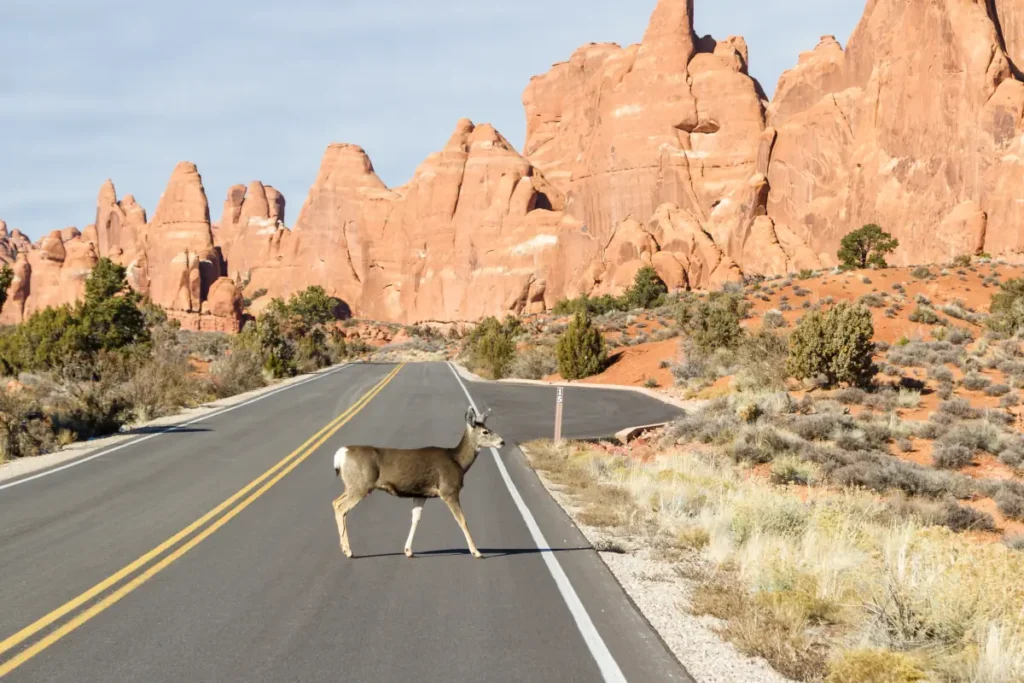
After a deer strike, pull off the road when it is safe, turn on your hazard lights, stay away from the animal, and call 911 if anyone is hurt. Photograph the damage, then have the car inspected before you trust it. Deer damage often hides behind a bumper cover that looks fine.
When are deer strikes most likely in Sonoma County?
In autumn. The Insurance Institute for Highway Safety found that animal-strike insurance claims run at more than twice the yearly average rate in November, which it ties to deer mating season. Caltrans says wildlife-vehicle collisions typically peak at this time of year, when animals move to winter habitat and deer and elk mating season begins, and asks drivers to stay alert through December.
Time of day matters as much as the season. The Insurance Information Institute puts the highest-risk hours from sunset to midnight and shortly before and after sunrise. When daylight saving time ends in early November, much of the evening commute moves after sunset, inside that window.
On local roads, UC Davis’s Road Ecology Center listed US-101 from Marin County to Petaluma among California’s persistent roadkill hot spots in its 2016 report. That covers animals of every species, not just deer, and the report is several years old.
What to do right after a deer strike
- Pull to the side of the road as soon as it is safe, and turn on your hazard lights. Caltrans gives the same advice.
- Do not touch the animal. The Insurance Information Institute gives the same advice.
- Call 911 if anyone is hurt. For property damage only, Caltrans says to call the local police.
- Photograph everything while it is safe to: the damage, the road, the animal, and where your car ended up.
- Call your insurance company to report the incident, as the Insurance Information Institute advises.
- Do not drive on a hunch. Fluid under the car, a warning light, a hood that will not latch, a pull in the steering or a climbing temperature gauge are all reasons to stop and get a tow.
Whether a deer strike needs a police report is a fair question. The California Department of Insurance’s driving guide says drivers must report accidents right away to law enforcement and to their insurance company. We are a body shop, not a law office, so if you are unsure, ask your insurer or call the police non-emergency line.
Which part of your policy pays for deer damage?
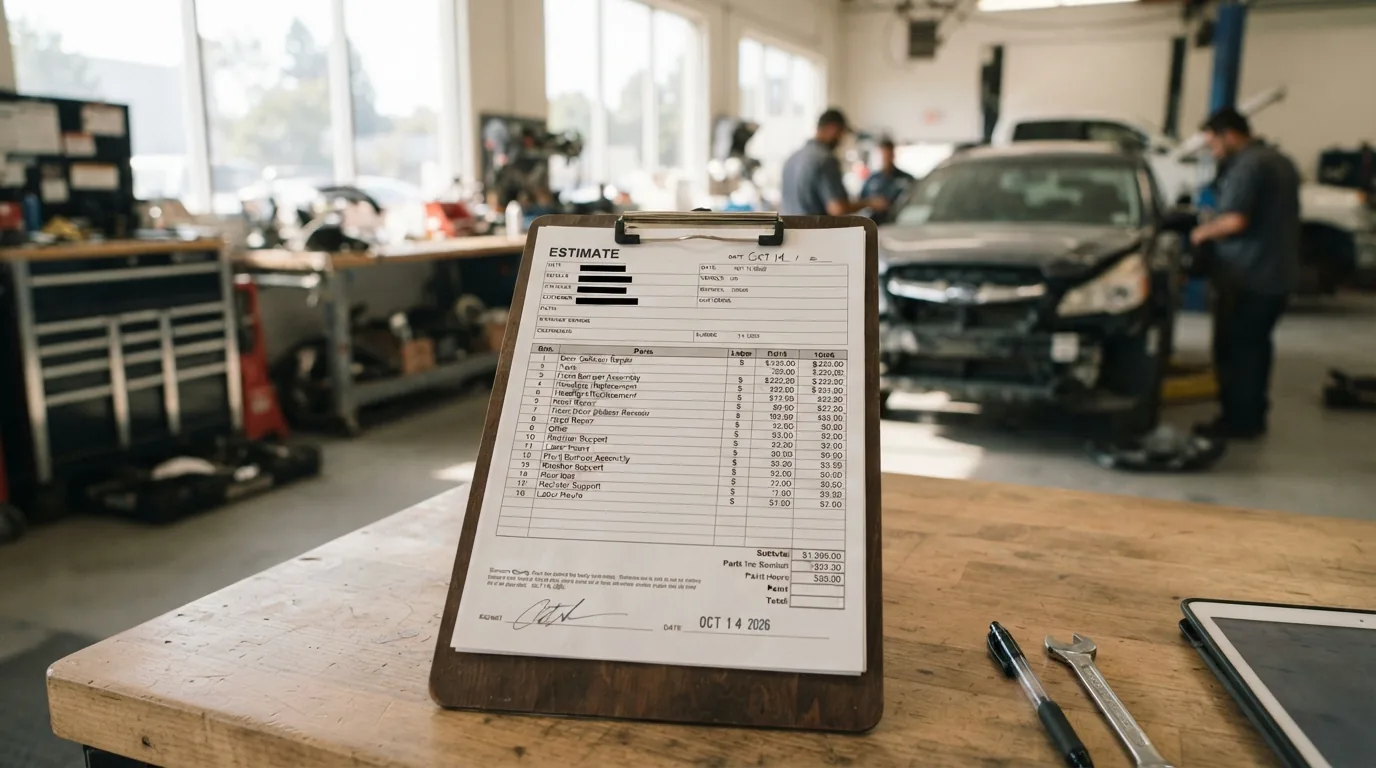
It depends on how your insurer words the policy, and the published guidance does not agree. The Insurance Information Institute says a collision with an animal is covered under the comprehensive portion of an auto policy. The California Department of Insurance’s driving guide, on the other hand, lists a deer among the objects covered by collision coverage.
Your declarations page shows which coverages you carry and what your deductible is, and your insurer or agent can tell you which one applies. Call them first. They will say whether to bring the car to us or have it towed.
Marquis is an AAA Direct Repair Program shop and works with all other major carriers. We coordinate the claim with your insurer from estimate to final invoice, so you are not the go-between. Our services page walks through the insurance process, and our guide to insurer-referred and independent shops covers how they differ.
What a thorough deer-strike repair covers
The visible damage is rarely the whole job. A deer meets the front of the car with real force, so a good repair plan looks behind the panels that seem fine.
| Area | Worth checking |
|---|---|
| Bumper cover and reinforcement | Cracks, broken mounts, and a bent reinforcement behind a cover that looks intact |
| Hood, hinges and latch | Whether the hood still latches and sits level with the fenders |
| Headlights | Cracked lenses and broken mounts that change where the beam points |
| Radiator and cooling parts | Leaks and bent supports behind the grille |
| Structure | Whether the impact moved the front of the car out of factory dimensions |
| Sensors and cameras | Many newer cars carry radar and cameras behind the bumper or windshield. If the repair touches them, they may need calibration |
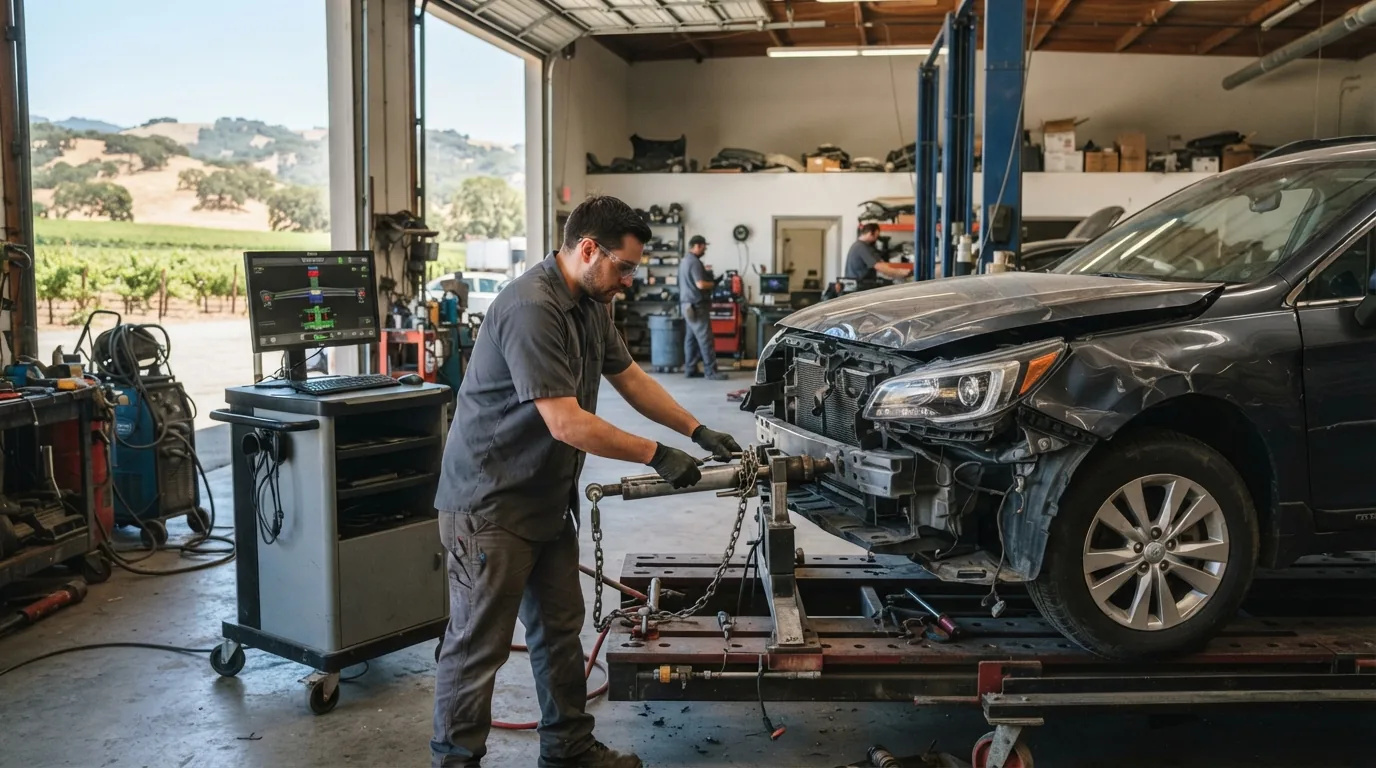
At Marquis, our frame and dimensioning equipment compares your vehicle’s structure against applicable manufacturer specifications and documents the measurements when the repair plan requires it. Paint is matched to your vehicle’s factory code with computerized Axalta mixing, then sprayed in a downdraft booth; see our auto painting page.
Two jobs go through trusted partners, while Marquis manages the repair and keeps you informed: glass, through MGT Auto Glass, and ADAS calibration, through Nor-Cal Calibrations, when the repair plan and the manufacturer’s procedures call for them. You deal with one shop.
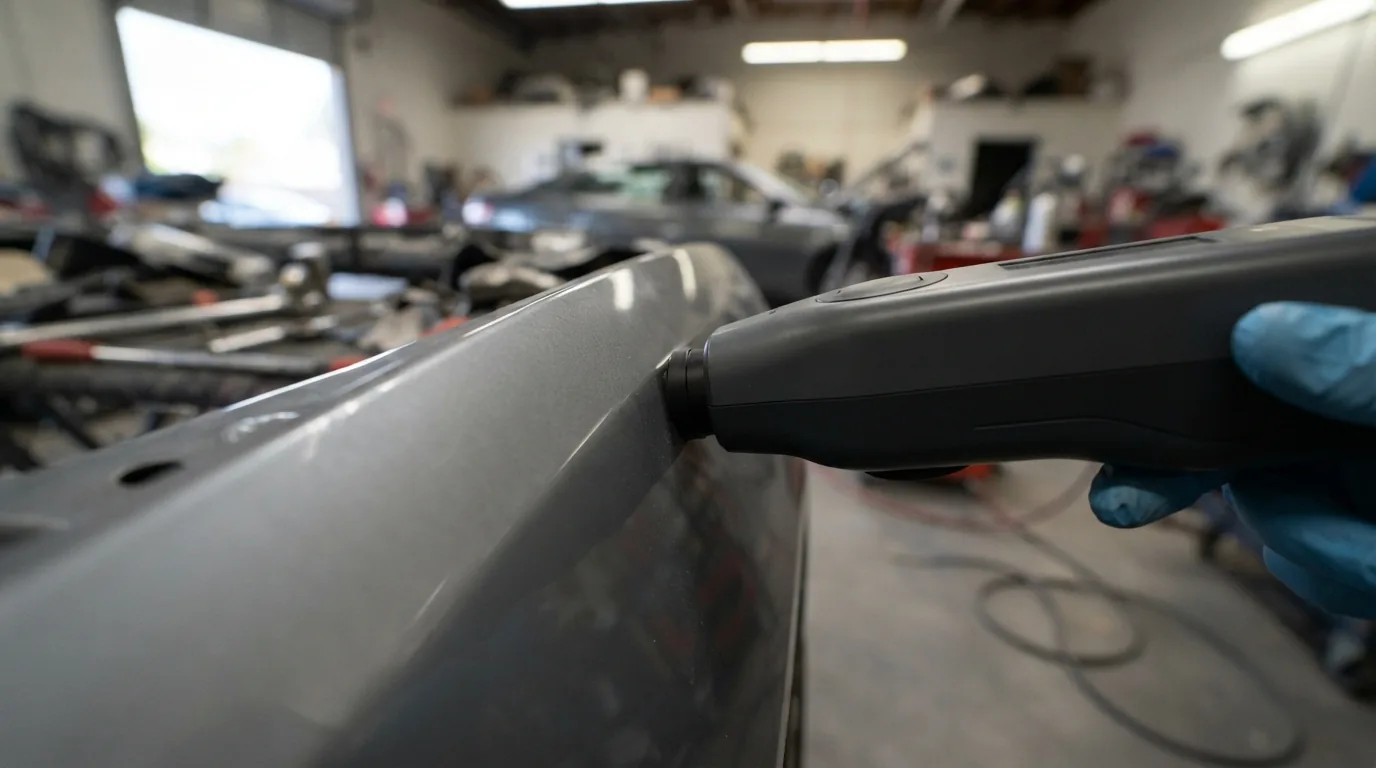
We follow applicable manufacturer repair procedures and hold OEM collision certifications for Ford, GM, Nissan, Kia, Hyundai and Mopar; our certifications page shows what each covers. Qualifying repairs carry our lifetime workmanship warranty for as long as you own the vehicle.
Start your estimate
Pick whichever is easier:
- Send photos from your phone. The photo estimate opens a secure form. An estimator reviews your photos, and most are reviewed within one business day. It is a starting point, because hidden damage can only be confirmed in person.
- Use the contact form or call (707) 544-5222.
- Come by 950 Petaluma Hill Road, Santa Rosa, CA 95404, Monday to Friday, 8:00 am to 5:00 pm. We give you a free written estimate.
Driving in from the south? See our Petaluma auto body page.
Questions we hear after a deer strike
Is it safe to drive after hitting a deer?
Not if you see fluid under the car, a warning light, a hood that will not latch, a pull in the steering, or a climbing temperature gauge. If you are not sure, get a tow.
Should I call my insurer or the shop first?
Call your insurer to report the incident. You can send us photos at the same time, and we will coordinate with your insurer once you decide to go ahead.
How long will the repair take?
It depends on the damage, parts availability, and whether structural work or calibration is involved. We explain the repair steps with your estimate, and we tell you about any changes before work begins.